
Biological Clocks and Global Racetracks: The Role of Circadian Rhythms in Timing International Thoroughbred Bets
Thoroughbred racing spans multiple continents and time zones, which creates distinct patterns where equine circadian rhythms intersect with bettor decision windows; researchers at veterinary institutions have documented how internal biological clocks in horses influence performance metrics across morning and evening race cards, while data from international federations shows wager volumes shifting accordingly in markets such as Australia, North America, and Asia.
Equine Circadian Patterns in Racing Contexts
Studies from animal science departments indicate that horses maintain core body temperature cycles peaking in the late afternoon, a rhythm that aligns with optimal muscle function and oxygen uptake during competition, and observers note that trainers in the southern hemisphere often schedule workouts to coincide with these peaks even when race times fall outside natural daylight hours. International circuits adjust start times to accommodate television audiences, yet physiological data reveals measurable dips in stride efficiency when events occur during trough periods of the circadian cycle, particularly in long-distance events exceeding 2000 meters.
Cross-Border Scheduling and Performance Data
Records compiled by racing authorities in Australia and the United States demonstrate that horses traveling across time zones experience temporary desynchronization lasting up to 72 hours, during which recovery protocols involving controlled light exposure and feeding schedules help realign internal clocks before competition. In August 2026 several major meetings in both hemispheres overlapped with these transition windows, prompting analysts to review past results where jet-lagged entrants showed altered finishing speeds compared to locally acclimated runners.
Wager Timing Influences Across Markets
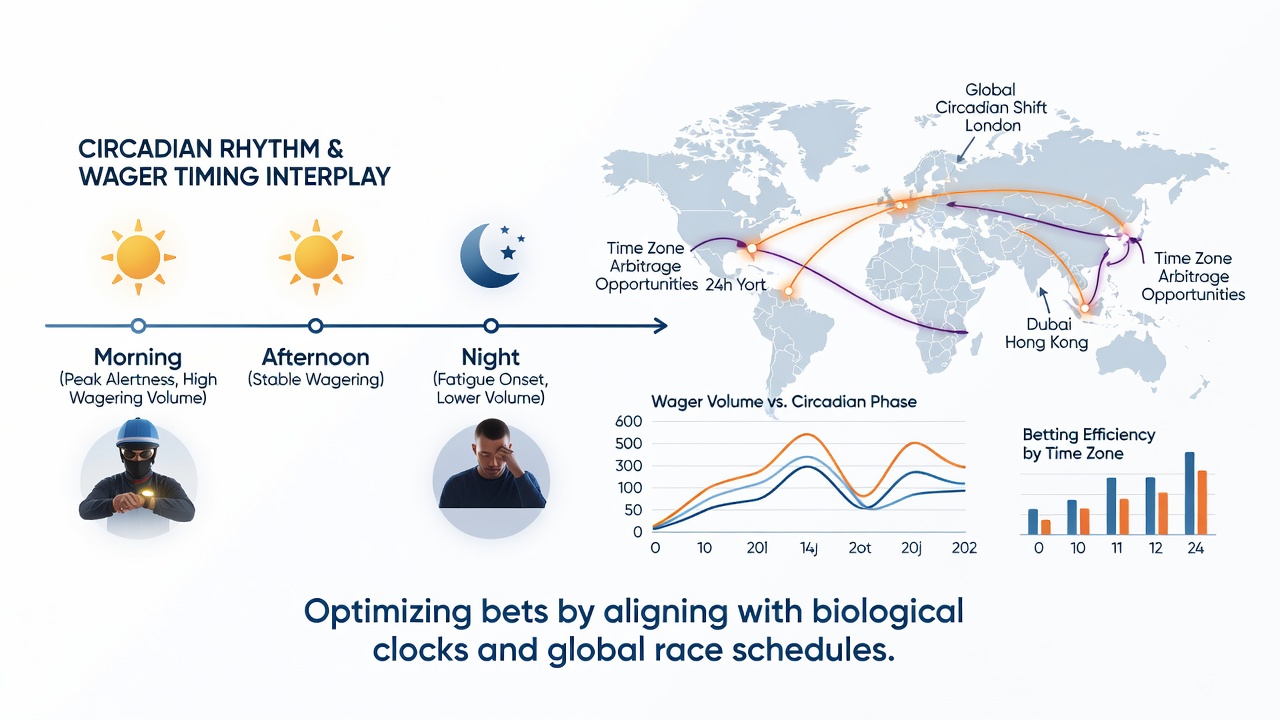
Bettors operating in global pools monitor these physiological windows because historical figures from tote operators reveal concentrated late betting surges when races fall within favorable circadian ranges for favorite contenders, and similar patterns emerge in Hong Kong and Japanese circuits where evening cards coincide with peak alertness phases for imported runners. Industry reports from the Asian Racing Federation highlight how syndicates adjust stake timing based on published workout data that indirectly reflects circadian readiness, creating observable shifts in odds movement during the final 30 minutes before post time.
Regional Variations and Research Findings
European racing calendars, which often feature late afternoon cards, align more closely with natural equine alertness peaks according to longitudinal tracking by university veterinary programs, whereas North American tracks running under lights at night introduce variables that researchers continue to quantify through heart-rate variability measurements. Data shared by the International Federation of Horseracing Authorities shows that horses with documented high adaptability to artificial lighting schedules maintain consistent performance regardless of start time, a factor that professional syndicates incorporate into pre-race modeling.
One study released through academic channels examined over 15,000 starts across five countries and found statistically significant correlations between circadian phase at race time and margin of victory in sprint distances, although longer races displayed weaker associations once environmental temperature was controlled for in the analysis. Trainers in Canada and Australia have adopted portable light-therapy systems during transit to mitigate these effects, and betting exchanges record corresponding adjustments in lay bets when such interventions become public knowledge.
Practical Applications in Global Pools
Platform operators handling commingled pools across time zones now integrate circadian-adjusted performance ratings into their displayed statistics, allowing participants to evaluate entrants whose biological readiness may differ from local favorites. Figures released by several major racing jurisdictions indicate that average bet size increases during periods when multiple high-profile races align with documented peak performance windows for the majority of competitors, while quieter periods see steadier but smaller volume flows.
Those monitoring international circuits also track veterinary reports that note variations in recovery rates post-travel, since delayed circadian adjustment can extend beyond the initial 72-hour window in older horses or those with prior health histories. Such details circulate through official channels and influence the timing of larger wagers placed in the hours leading up to race day rather than minutes before the start.
Conclusion
International thoroughbred circuits continue to generate extensive datasets linking equine biological rhythms with observable betting patterns, and regulatory bodies outside the UK maintain ongoing reviews of how these factors intersect with market integrity measures. Continued collaboration between veterinary researchers and racing organizations supplies the factual foundation for understanding timing dynamics across hemispheres, particularly as August 2026 meetings highlighted the practical outcomes of cross-zone travel on both performance and wagering behavior.