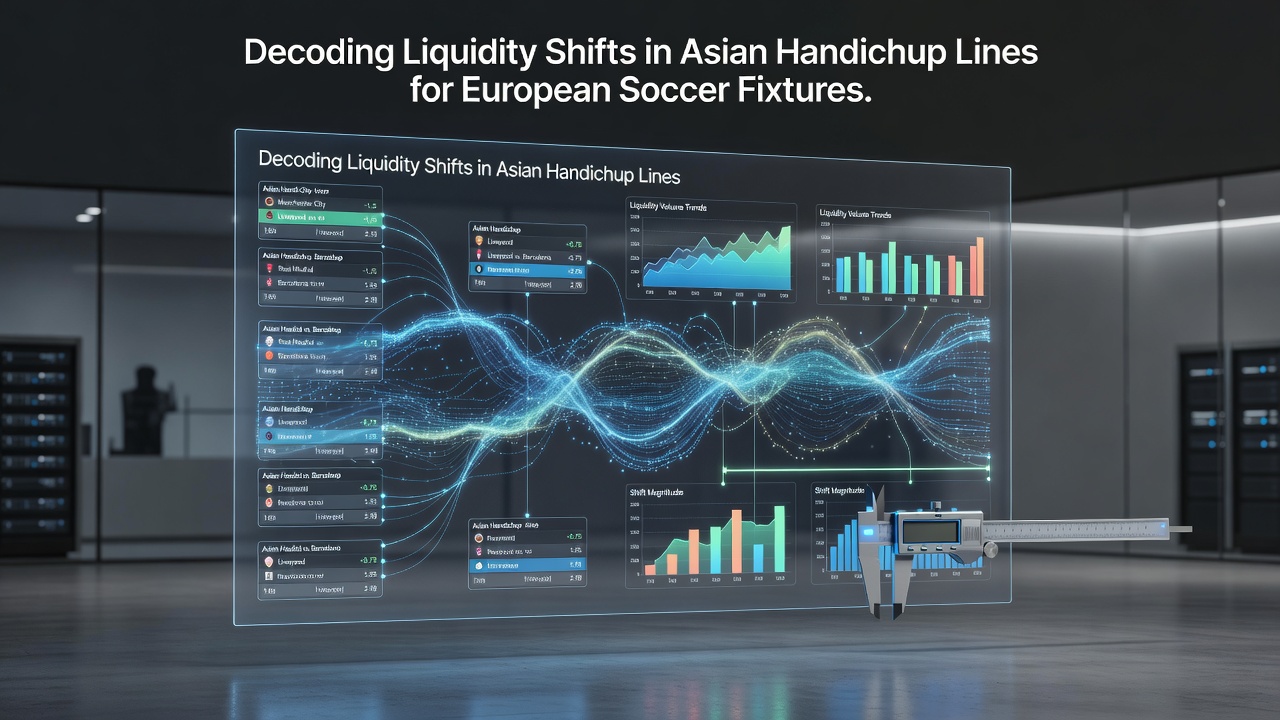
Tracking Market Movements in Asian Handicap Markets Across Major European Leagues
Asian handicap markets operate through quarter and half goal lines that split risk between bettors and bookmakers while creating balanced action on both sides of a fixture. Liquidity shifts occur when substantial volumes move through specific lines, prompting odds to adjust in real time as new information reaches the market. Observers note that these movements often reflect sharp money entering after team news, weather updates, or late lineup changes in leagues such as the Premier League, La Liga, and Serie A.
How Asian Handicap Structures Influence Liquidity
Quarter lines like -0.25 or +0.75 allow partial stakes to win, lose, or push, which spreads risk and encourages deeper market participation compared with three-way outcome betting. When liquidity builds quickly on one side of a line, the market responds by moving the handicap or adjusting the price to restore balance. Data from major European fixtures shows that lines with initial liquidity above certain thresholds experience smaller subsequent movements once the early volume clears, whereas thinner lines can shift dramatically on modest bets. Those who monitor order flow often see patterns where early money on favorites at -0.5 creates a cascade that forces bookmakers to lift the line to -0.75 within minutes.
Factors That Trigger Shifts in European Soccer Markets
Team news released in the hours before kickoff frequently initiates liquidity changes, especially when key players are ruled out or reinstated. European matches scheduled in August 2026, including opening rounds of domestic leagues, tend to show pronounced early liquidity because squad rotations and transfer-window developments create uncertainty. Weather reports, pitch conditions, and referee assignments also contribute, although their impact registers more clearly in certain stadiums known for variable surfaces. Research indicates that volume spikes around European fixtures correlate with cross-border betting activity from Asia, where Asian handicap markets originated and retain strong participation.
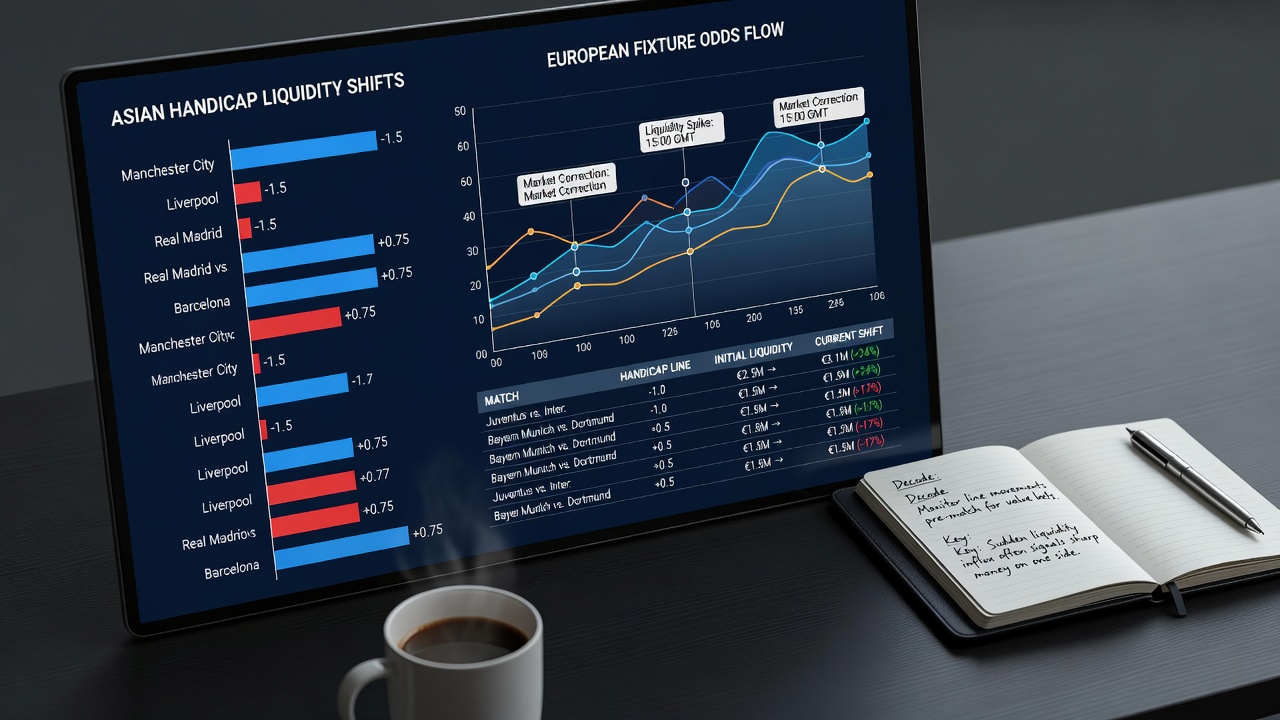
Market makers adjust limits and prices continuously, yet sharp bettors who identify discrepancies between early and late liquidity can position accordingly. One study revealed that lines moving more than 0.25 goals in the final two hours before kickoff often signal informed money rather than recreational volume. Those patterns appear consistently across Champions League group-stage matches and weekend domestic fixtures alike.
Monitoring Tools and Data Sources Used by Market Participants
Professional traders track multiple exchanges and bookmaker feeds simultaneously to detect when liquidity concentrates on particular lines. Software that timestamps volume spikes and compares them against historical benchmarks helps isolate genuine shifts from noise. According to industry reports published by the European Gaming and Betting Association, average handle on Asian handicap products for top European leagues has grown steadily, with certain fixtures attracting eight-figure liquidity pools. Academic papers examining betting market efficiency note that price discovery accelerates when multiple jurisdictions allow simultaneous access, reducing the window for arbitrage. Observers have documented cases where a single large wager on an underdog +0.5 line in a Bundesliga match prompted a cascade across several operators within seconds.
Seasonal Patterns and Cross-League Comparisons
European soccer calendars produce distinct liquidity rhythms, with winter months showing compressed windows because of fixture congestion and travel. Summer pre-season friendlies, by contrast, often display thin early markets that widen only after initial results establish form indicators. Data shows that Serie A and Ligue 1 matches sometimes exhibit slower liquidity build-up than Premier League or Bundesliga games, partly because of differing broadcast schedules and betting preferences in key regions. Those patterns become visible when comparing line movements across parallel fixtures on the same matchday.
Conclusion
Liquidity shifts in Asian handicap lines for European soccer fixtures reflect the interaction of volume, information timing, and structural features of quarter and half goal markets. Market participants who follow order flow, benchmark movements against historical norms, and account for seasonal factors gain clearer visibility into how prices evolve. Continued growth in cross-regional participation, documented in reports from organizations such as the European Gaming and Betting Association and academic analyses of market efficiency, suggests these dynamics will remain central to understanding pricing in major European leagues through 2026 and beyond.